
Statistics show that it takes approximately 10,000 hours to perfect a skill.
However, companies that stay ahead are known to provide training manuals to their employees. This reduces the time required for learning and enables employees to perform at an optimal level.
In this article, we will discuss what a training manual is.
Plus, we’ll look at different types of training manuals, examples of training manuals, and what should be included in a training manual.
What Is a Training Manual?
A training manual is a comprehensive document that outlines instructions on how to perform specific tasks within an organization.
It provides employees or trainees with a blueprint on how things are done.
For example, a firefighter who has undergone repetitive training on the use of fire sprinklers, uncrewed aerial vehicles, and more.

These manuals explain how to use tools, helping the trainee settle into the job with ease.
It exposes them to areas such as job responsibilities, operational procedures, and client retention methods.
In short, it reduces the tedious learning period and provides them with a roadmap.
Types of Training Manuals
A training manual comes in various forms and serves distinct functions within the organization.
We have here five different types of training manuals:
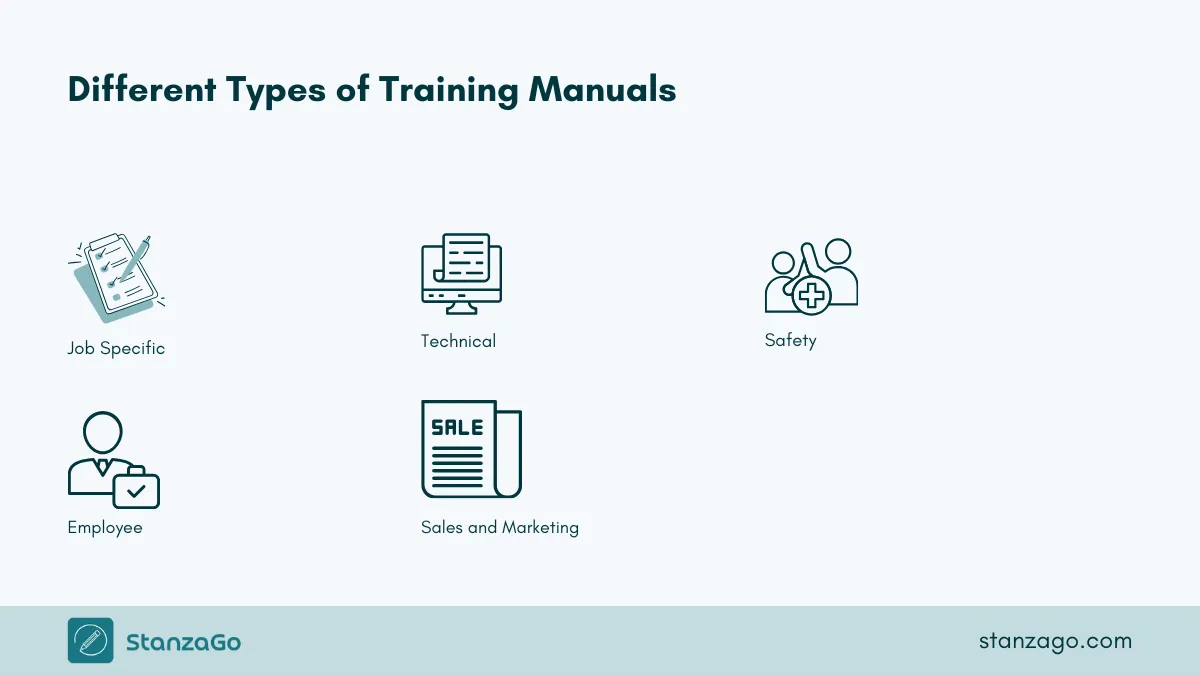
Job-Specific Manuals
From the outset, everyone needs training or a brief explanation as to why it is “ABCD” and not “DCBA,” so there are specific manuals for each job or role.
For this reason, you are expected to refer to the alphabetical table to check how it is written.
A specific manual provides the blueprint for carrying out your role. Failure to follow it will result in mistakes. This leads to minimal productivity and increased stress in an effort to deliver more than expected.
Technical Manuals
These types of manuals are designed to train employees in technical skills, such as software development, Java, and HTML.
These manuals are essential for the adequate performance of the role.
Safety Manuals
A safety manual is another essential document that plays a crucial role in ensuring safety within an organization.
A typical example is the firefighter who undergoes stages of training on how to use firefighting tools.
It also ensures that emergency procedures are followed and risk is minimized.
Employee Manuals
Employee manuals are step-by-step tutorials that include:
- Documents
- Courses
- Video presentations
These help train and onboard new or existing employees.
Sales and Marketing Manuals
Training Manuals that train on how to convert customers into paying clients are sales and marketing manuals.
These entail the human psychology of buying and selling.
It also includes the best strategies for closing deals, along with everything related to sales and marketing.
These are a few types of training manuals, and when a company is aware of these types, it can guide them on their specific needs and how to develop a comprehensive one for their company.
7 Examples of Training Manuals
We have shown you what a training manual is and the types of training manuals. Let’s look at seven examples of training manuals in the preceding part of this article.
1. Employee Safety Training Manual
For companies that prioritize safety and a healthy environment, new employees are expected to peruse this manual.
Some companies have an unwritten rule that once you join, you must take the fire-prevention training manual. It enables the organization to educate the employee on the next steps when a fire breaks out.
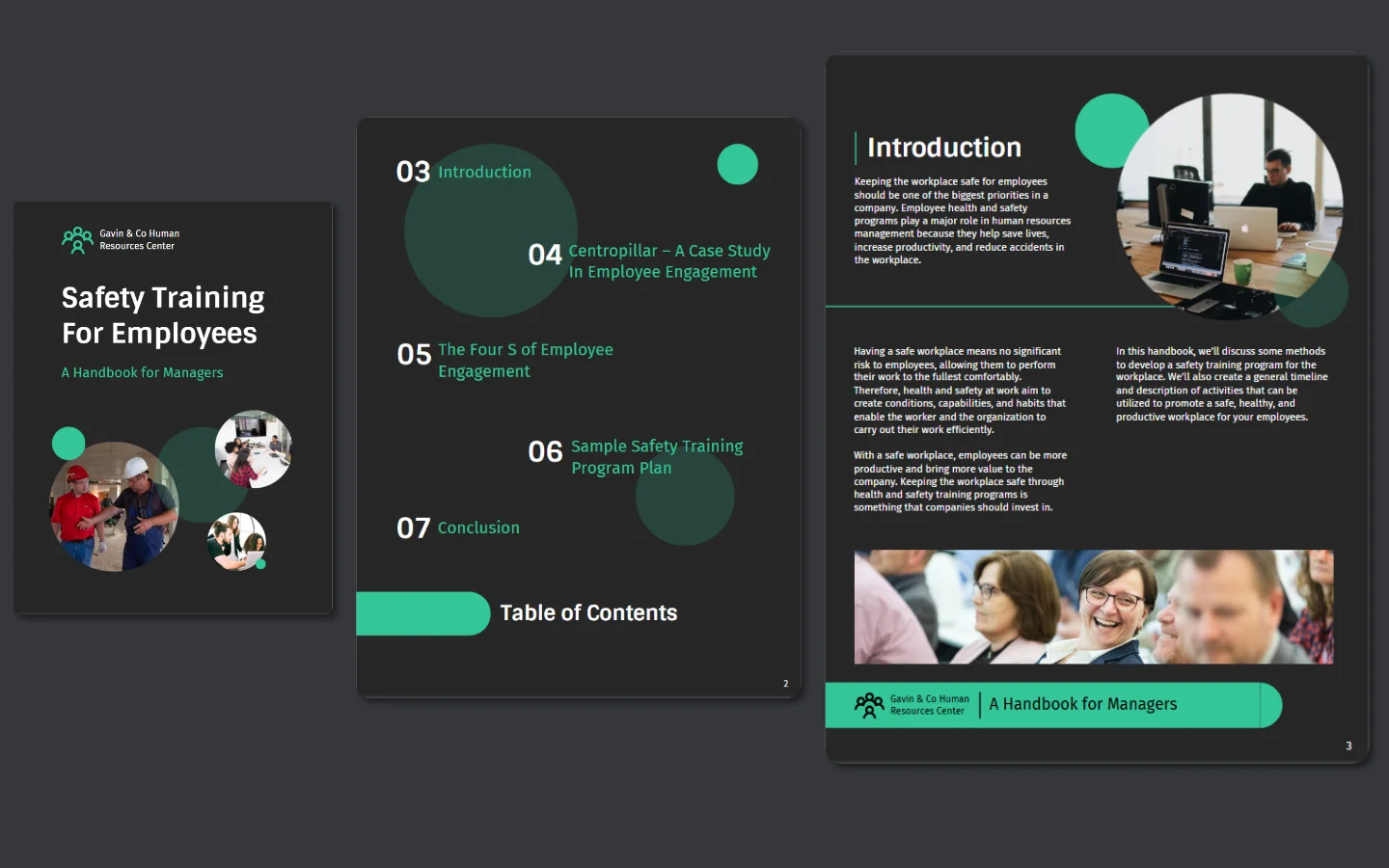
Examples of the companies that require you to read a safety manual include:
- Construction firms
- Manufacturing firms
- Motels
- Warehouses.
When a construction company or a fabric company hires you and asks you to learn the basics of extinguishing a burning book or stationery.
This manual will teach you the steps to avoid such incidents and how to extinguish fire.
2. Machine Usage and Maintenance Manual
This is primarily for companies in the construction and production sectors that require their machines to be maintained regularly.
One such company is a noodle producer; their machines must be intermittently maintained, such as by applying more oil to the angles or adding more water.
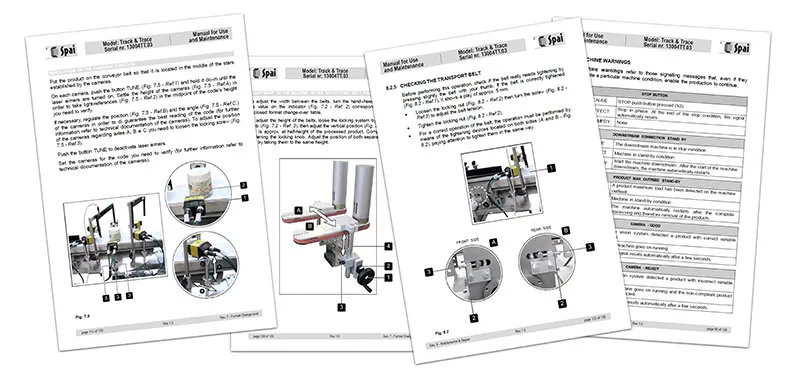
For large enterprises, the best practice could be to turn off the engine two or three hours before the next production time. The maintenance culture that leads to mismanagement is why the usage and maintenance training manual was designed.
3. Troubleshooting Training Manual
Troubleshooting is a method for diagnosing problems. It helps determine the cause, identify the solution, and outline the next steps when such a situation occurs.
A troubleshooting training manual guides users or employees on what to do when faced with a specific problem.
It reduces the stress of trying to figure things out on the spot.
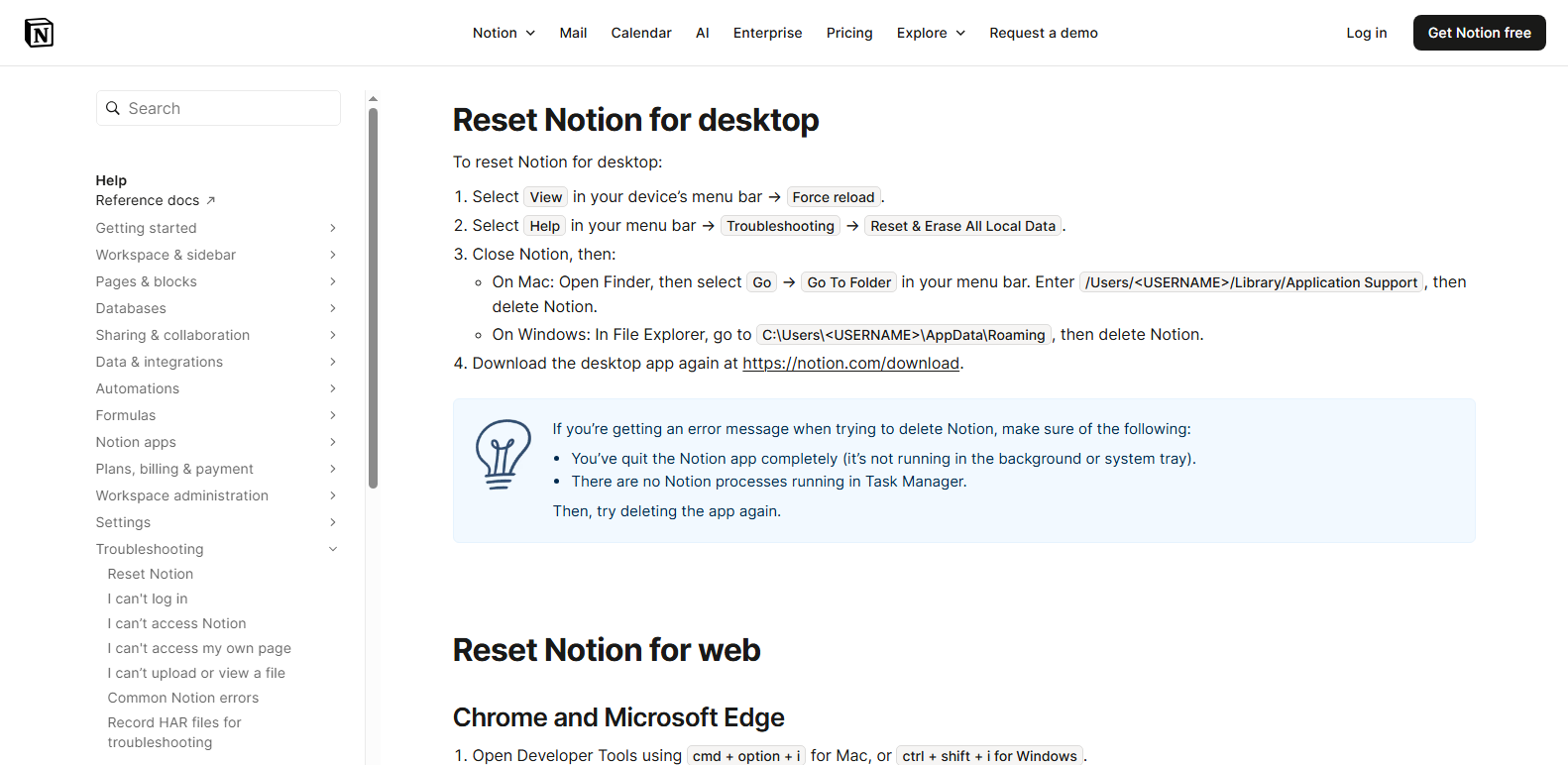
For both small and large enterprises that operate in the cloud, there is always a need for a troubleshooting and maintenance manual.
4. Project Handover Training Manual
The project handover training manual template is another example of a good training manual.
It serves as a guide that outlines how fellow employees can transfer the project they are currently working on.
This ensures that projects are not abruptly left without being handed over for continuity.
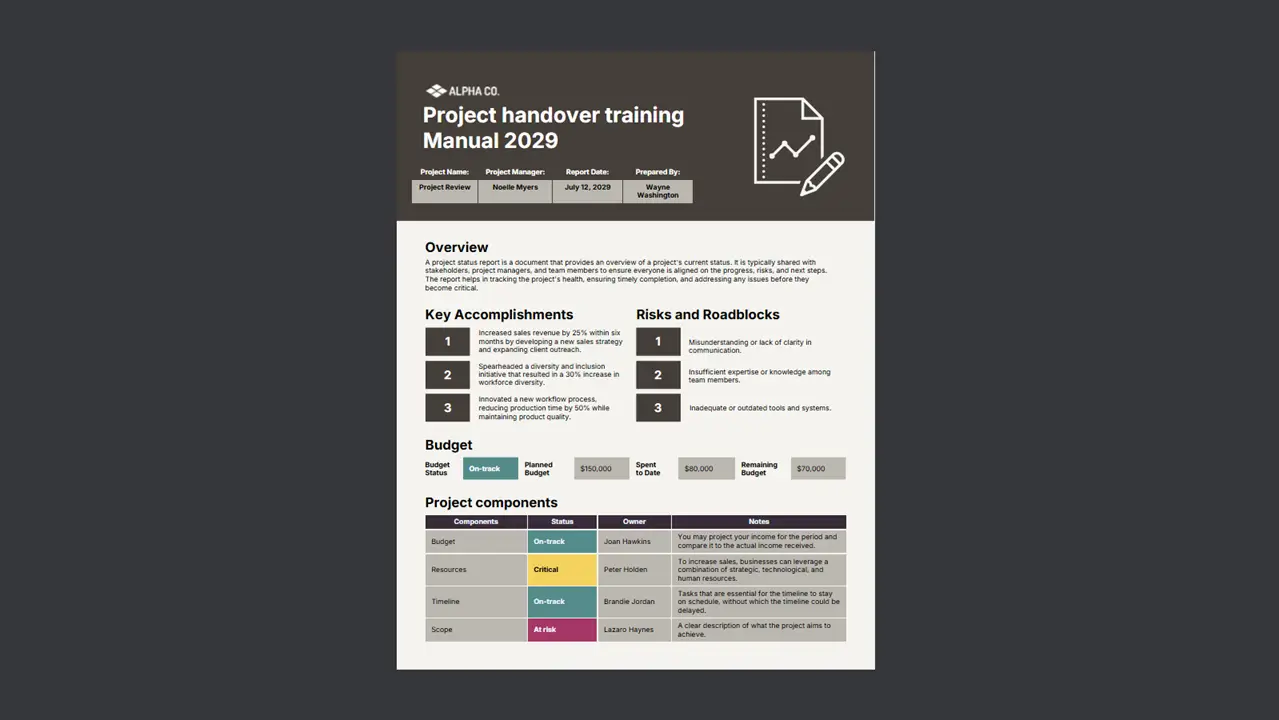
A project handover training manual provides instructions for handing over a project effectively. It includes:
- Its objectives
- Associated risks
- The roles of those involved
And the necessary training resources required to complete the project.
5. Software Adoption Training Manual
Another example is the software adoption manual. This manual explains how to onboard new software, whether for personal use or corporate entities.
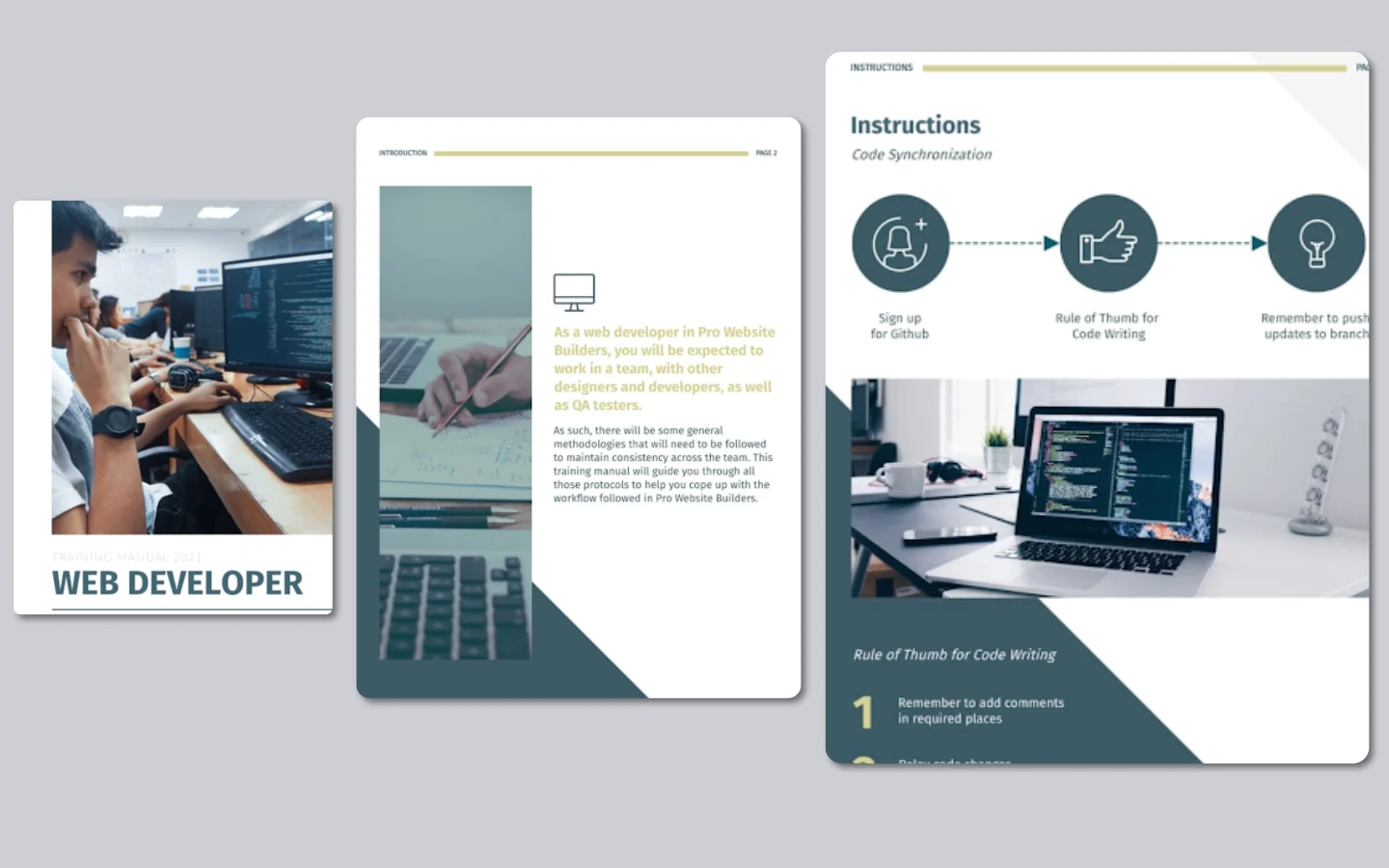
This manual is essential because it lightens your workload and makes your journey easier.
6. First Aid Training Manual
The first aid training manual is a comprehensive guide that provides essential steps and procedures for responding to medical emergencies and administering treatment.
This manual is designed to enable prompt and confident first aid care, regardless of prior qualifications.
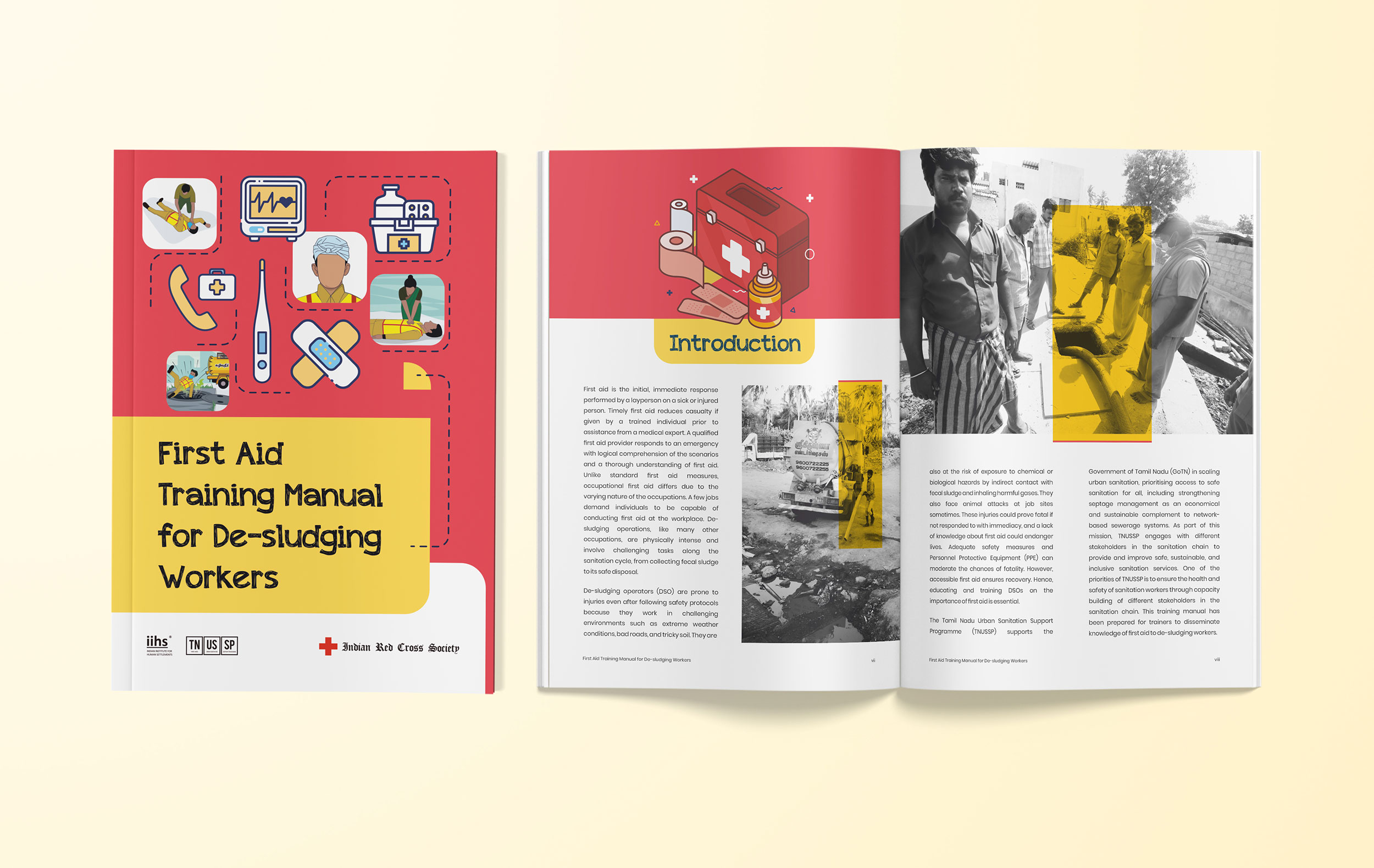
Most times, it encourages attending to the injured person before they are taken to the health facility.
7. Call Centre Training Manual
This manual provides the fundamentals of a successful call centre training program for employees and sales representatives.

As a call centre agent, you need to possess solid interpersonal and soft skills, which are typically included in the training manual.
These are seven examples of good training manuals that your team can explore, depending on your industry. And if you need a template or you need help designing your training manual, StanzaGo is your best bet for a free employee training manual template.
However, the list is not exhaustive as we still have the food hazard training manual, bartender training manual, and many more.
What Should Be Included in a Training Manual?
Designing your training manual is not just about compiling a collection of instructions and guidelines to be adhered to. You must know how to write a training manual and understand the essential elements it should include.
A well-designed training manual should have the following elements:
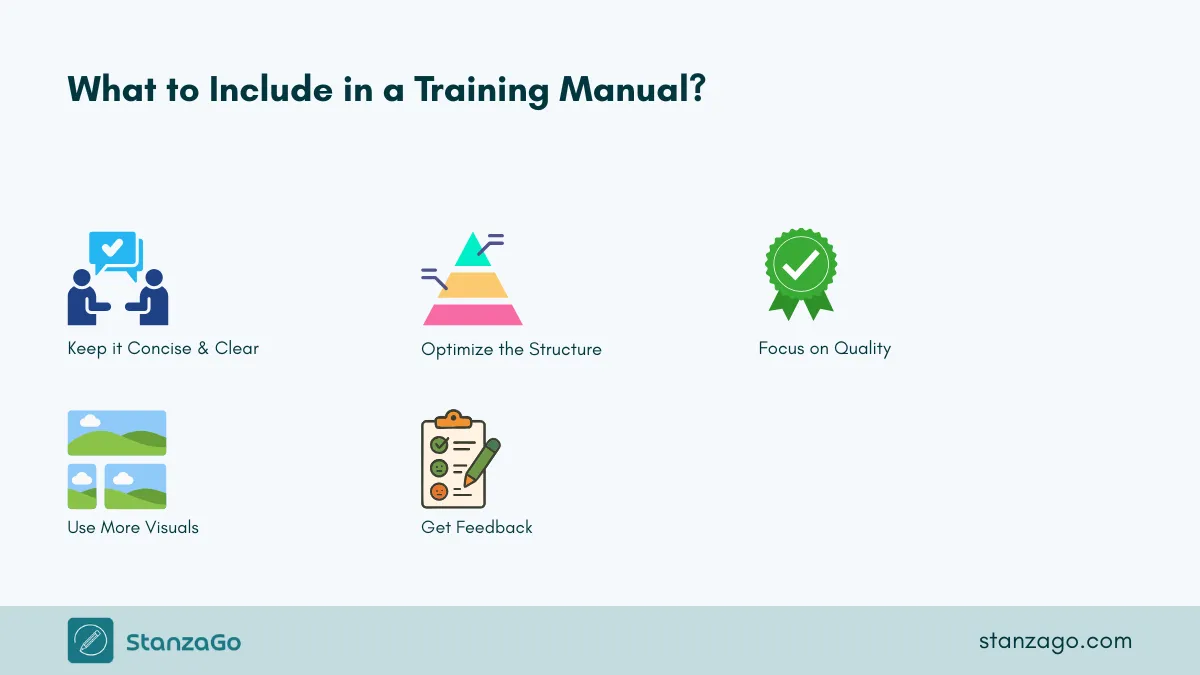
i. Be Concise and Clear
Billy Cox mentioned that “clarity is power and the more clear and concise your desires are, the more likely you are to achieve them.”
This brings us to our discussion: when writing a training manual, be clear and direct to convey the message effectively.
ii. Structure It Appropriately
Do not forget that structure is everything, and a lack of structure will obstruct the flow of your message.
Ensure that the training manual flows from top to bottom.
Using headings, subheadings, paragraphs, and connectives will make the content more appealing.
iii. Quality Over Quantity
When designing your manual, do not forget that it is not in the bulkiness of the training, but in the result it produces.
Continue writing and editing to maintain the quality.
iv. Use More Visuals
Another element that needs to be added is the visuals. Avoid infographics that are unappealing or do not align with the subject matter.
v. Get Feedback
Before publishing, send the manuscript to a few people for review and feedback on what has been designed.
If there is a need to redesign or make a few tweaks, gather the feedback and incorporate it.
These are just a few key elements of a well-designed training manual, so when you are putting one in place, do not leave any of these behind.
Training Manual vs. Employee Training Guide
You may wonder if there is a distinction between a training manual and an employee training guide. It’s time to see the differences between the two.
First, these two serve different purposes in a company.
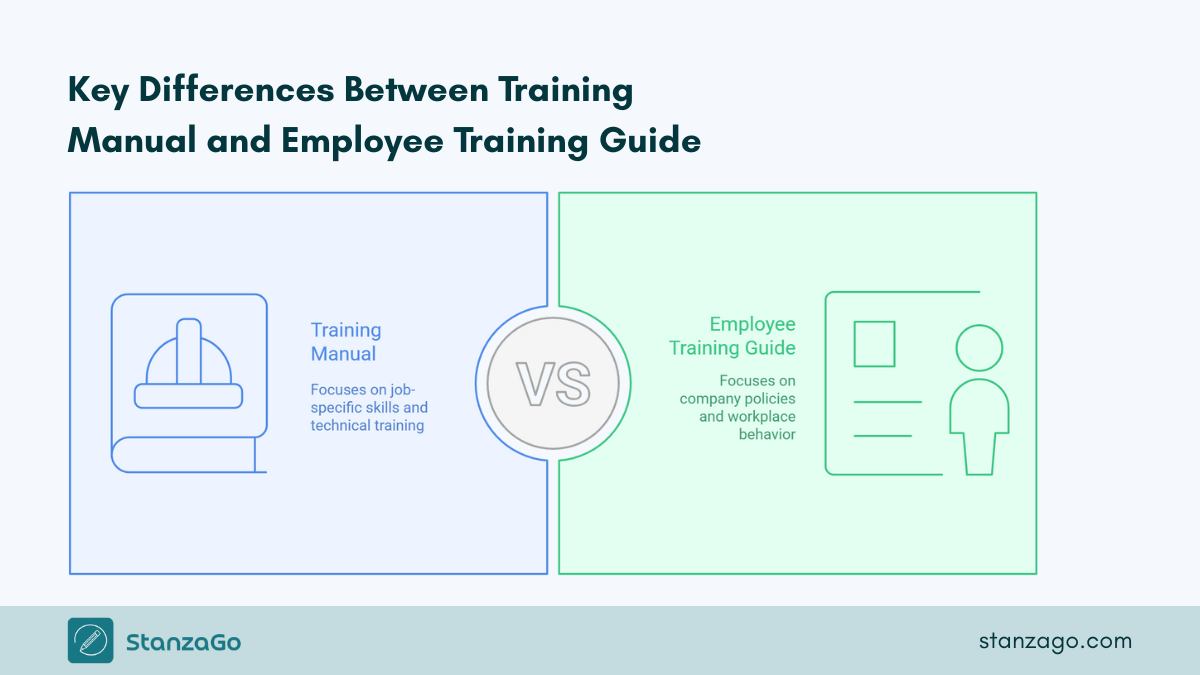
The primary difference is that a training manual outlines the process of training an employee for their job.
In contrast, an employee training guide outlines the company’s rules and policies and onboards an employee to the company.
Another difference is that an employee training guide focuses on how fellow employees should conduct themselves. On the other hand, a training manual covers topics such as machine handling, operational skills, technical skills, and other relevant areas.
Lastly, a training manual is intended for educational purposes, while an employee guide is designed to convey the workplace’s values and principles to both new and existing employees.
FAQs
Do companies need a training manual?
Growth-centric companies surely need a training manual.
Should a training manual be added to the employment kit
Yes, you should add a training to your staff employment kit.
Should a training manual be long or short?
The size of a training program depends on user or company demand, so when designing one, consider all these factors.
Start Developing Your Company Training Manual
Training manuals are not just documents — they are deliberate shortcuts that capture expertise, remove guesswork, and turn individual experience into repeatable, measurable performance.
Rather than asking every new hire to grind toward the mythical 10,000-hour mark, a well-crafted manual transfers the essential know-how so people reach competence faster, make fewer errors, and contribute reliably from day one.
Why they matter (practical impact): manuals shorten onboarding time, reduce costly mistakes, preserve institutional memory, ensure compliance, and make scaling predictable. In safety-critical or technical roles, they’re the difference between chaos and continuity.
A short, practical blueprint to get results:
- Start with outcomes: define the exact tasks and what “proficient” looks like for each role.
- Prioritize by risk and frequency: document the highest-impact tasks first (safety, core operations, common faults).
- Write for action: use plain language, short steps, checklists, and the “why” + “how” for each procedure.
- Use visuals and examples: screenshots, diagrams, and short videos cut learning time and ambiguity.
- Test and iterate: pilot with real users, gather feedback, fix gaps, and add troubleshooting FAQs.
- Make it living and accessible: assign an owner, include a revision history, store it where people search and reference it (both digitally and offline, where needed).
Measure what matters: track time-to-proficiency, error/incident rates, manual usage (who opened what), and trainee assessment scores. Use those metrics to prioritize updates and prove ROI.
A training manual done right is compact, current, and connected to real work — not a dusty binder. Build it with purpose, keep it practical, and it will pay back many times over by turning tacit skill into predictable, scalable capability.